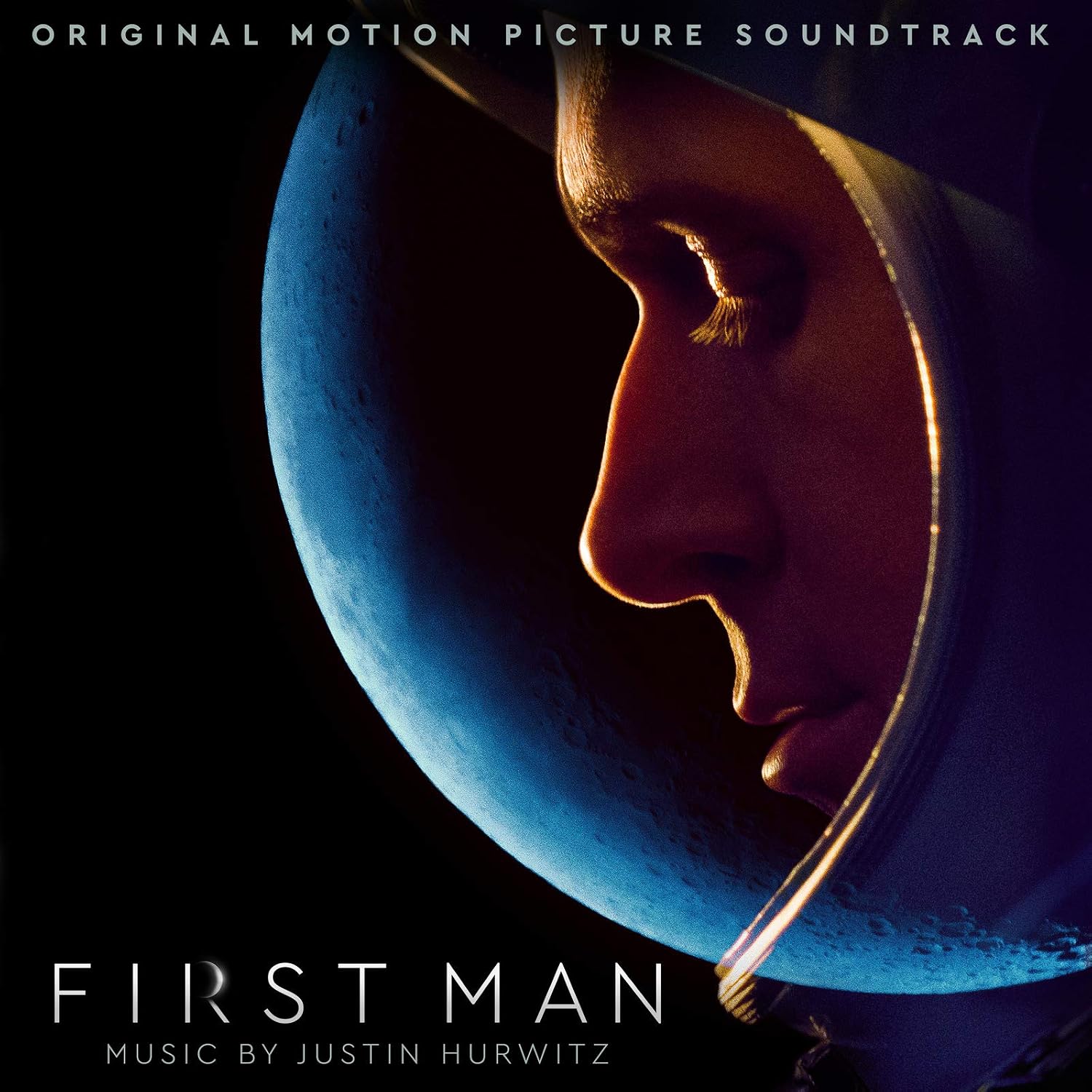
First Man
“A tale of two extremes with a brilliant theme and songs with absolutely no value at all, but it is much better than the sum of its parts”
A look at the life of the astronaut, Neil Armstrong, and the legendary space mission that led him to become the first man to walk on the Moon on July 20, 1969.
The short timing of the songs penalizes this soundtrack more than it should, but that’s the nature of the beast. Overall, First Man is an accomplishment in many regards, despite what the rating says. In addition, it is strong proof that if you can make a pleasant theme, you can make a great album.
From Wikipedia: The musical score for First Man was composed and conducted by Justin Hurwitz. The score was performed by a 94-piece orchestra, with instruments such as the electronic theremin and Moog synthesizer, as well as vintage sound-altering machines including Leslie speakers and an Echoplex, in order to balance vintage and electronic sounds.
Track by track
35 tracks · rated out of 5X-15
1:22A quiet opening, like a boat on an ocean. The noises sound unnerved. Not a great individual listen.
Good Engineer
1:06It sounds like an outer-space soundtrack, like the 90s version of aliens popping in and out. At least it’s somewhat entertaining.
Karen
0:45A piano creates a softer tone for this track, and it harkens to the main theme. Still, its short length really keeps you from getting into it.
Armstrong Cabin
1:15The piano theme from “Karen” continues, and it’s just lovely. Except it’s not a piano, it’s a harp. I love harps and the song is good too.
Another Egghead
1:05A more feedback tone here. It’s almost like a bassline in a rock song.
It'll Be an Adventure
0:41A theramin adds a lot of lovely complexity to this one, and it carries this one.
Houston
2:16It sounds like a ballet version of the main theme. Whimsical strings with light percussion backing. Very pleasant and highly enjoyable. The soundtrack seems to be, mostly to this point, variations of the main theme. When they work, they work well. This one also has really good positive energy.
Multi-Axis Trainer
2:54A different sound, a more subdued tone. It’s clear this one is a tense affair. This track is a longer piece. The deeper stringed instruments do a good job creating a bassline. Intermittent brass helps create a more majestic atmosphere.
Baby Mark
0:47Slow and steady to start. A few piano keys create a song with shadows of the main theme.
First to Dock
1:27A vibrating, pulsing introduction with the deeper bass string instruments. It sounds a little bit like the menu music from “Ace Combat” by Keiki Kobayashi.
Elliot
0:28There’s no real sound here.
Sextant
1:45A different harp take on the main theme in a different chord. Again, it’s a really pleasant sound and harkens almost to a James Horner’s “A Beautiful Mind.” It’s quite an amazing song. It’s also endlessly repeatable.
Squawk Box
1:54I love the focus on the harp over a similar sounding piano. The transients of a harp just sound so much more fulfilling. Another perfect example of how a sound doesn’t need to be complex to be excellent.
Searching for the Aegena
1:51A little more tension in this piece with a series of electronic sounding bits. It sounds like space. But it’s not a good sound.
Docking Waltz
3:22The most traditional sounding piece so far on the orchestra, there are hints of a broader orchestra here but still mixed with the electronic sounds that are familiar in space soundtracks. About a minute in, the piece starts with a different harp tone with the broader orchestra for a real waltz piece. If the whole track was like the 2nd half, then it would be better.
Spin
1:15An alarm sound. Something is wrong.
Naha Rescue 1
1:05Another song with no real sound. There’s a deep bassline that’s pretty cool though.
Pat and Janet
1:34Another harp piece. There’s no real meat to this one, however. It’s almost elevator harp music with the occasional piano note.
The Armstrongs
2:25This one continues with the sound from “Karen” earlier, and that’s not an issue. It’s just really… really easy to enjoy. The harp really sets an agreeable mood.
I Oughta Be Getting Home / Plugs Out
1:10This one uses the theremin again. It’s again, really good. It’s just a satisfying listen, even as the sound ramps up in volume and intensity towards the end.
News Report
0:42It just came and went with a rising action.
Dad's Fine
1:03The deep bass string instruments return on this one. It’s a tense but likeable sound.
Neil Packs
1:25You can hear shadows of the main theme in this one, and that’s actually quite cool. It’s worth more than the sound on the surface.
Contingency Statement
1:56The use of the theremin returns. The actual Contingency Speech was a speech prepared by Nixon’s speechwriter William Safire, only to be delivered in the event the astronauts died. There’s sadness in this song as it ends in a blaze of orchestral noise.
Apollo 11 Launch Hall of Fame
5:50At nearly 6 minutes in length, this is the longest piece on the soundtrack. It’s also a testament to the fact that every Saturn V launch is a momentous occasion. The track starts off almost timid in its drums, with the orchestra only playing a light backing. But Hurwitz starts layering sounds on to build the tension. The tension continues to build and build and build, even 3 minutes in. You are holding your breath and waiting for the next layer to hit. At 3 minutes in, the tone changes completely from one of anticipation to one of action. I put this track on full volume because it’s magnificent. As we hear hints of the piano in the background of the fear, you become emotionally charged. It’s a perfect song.
Translunar
1:01As we continue in the void of space towards The Moon, it’s a sound of nothingness.
Moon
1:07In space, there is no sound.
Tunnel
0:52Also in tunnels, there are no sounds worth mentioning.
The Landing Hall of Fame
5:31Let’s be clear, this is the highlight of the album. The pressure on the entire US space agency is thick in the air, and Hurwitz does an incredible job translating the fear from the stars into our ears. The track is laden with the constant presence of death. Anything wrong will begin a sequence of utter failure. As the track continues, we move from the feeling of failure to one of hopeful jubilation. There’s so much happening in this piece that it’s impossible not to feel an attachment to the story that it carries. Hurwitz brings all of the orchestra in for the landing, and he brings you close and makes you hear his voice.
Moon Walk
1:29An ethereal sound but one that utterly works. Another rendition of the main theme but in a unique fashion.
Home
1:51Something about “Home” feels right at home. It just works in a nostalgic sense.
Crater
2:00Justin Hurwitz uses the theremin to great effect.. Its voice carries the weight of the emptiness of the moon. It’s beautiful and stunning.
Quarantine Hall of Fame
2:15Our harp and our theremin return for a rendition of the theme that’s again, just stunning. It’s endlessly listenable. It’s beautiful.
End Credits
4:19Many of the sounds that we’ve heard up until this point return, but there’s a new addition of really vibrant brass notes as well. It’s a really easy and pleasant listen.
Sep Ballet (Bonus track)
1:17As we fade from the story of America’s greatest technological achievement, we are left with a soft, pleasant piece to say goodbye to.
Time weighted averages each track’s rating by its runtime (longer tracks count more). Track weighted treats every track equally. Both are computed directly from the ratings above.